On June 19, 1865, more than two months after the Confederacy surrendered and nearly two and a half years after the Emancipation Proclamation, Union General Gordon Granger rode into Galveston, Texas, and read General Order Number 3. It told roughly 250,000 enslaved people that they were free. Freedom did not arrive when it was promised. It arrived when there were finally troops to enforce it. That is the first lesson of Juneteenth. In this country, freedom has never been delivered on time. It has been delayed, then defended, then attacked, and it has only ever advanced because the people it was promised to refused to stop pressing for it.
We Were Here Before the Country Was
In August 1619, more than a century and a half before the Declaration of Independence, the first enslaved Africans were brought ashore at Point Comfort, Virginia. By the time the colonies declared their own freedom in 1776, slavery was legal in all thirteen. Black patriots fought for that freedom anyway. Crispus Attucks was among the first to die for the revolution at the Boston Massacre in 1770. Thousands of Black soldiers served in the war, and many who were promised their freedom in exchange never received it. We helped build the nation, its capital, and its wealth, and we did it while being counted as property.
Anti-Blackness Was Written Into the Foundation
The Constitution protected slavery in four deliberate ways. The Three-Fifths Clause counted enslaved people as fractions of a person to inflate the political power of the men who owned them. A second clause shielded the transatlantic slave trade from any ban until 1808. The Fugitive Slave Clause made the entire country complicit in returning people to bondage. And the Electoral College rewarded slave states with power drawn from the very people they denied. Anti-Blackness was not a flaw in the foundation. It was poured into it.
Freedom on Paper Was Not Freedom in Fact
Emancipation cracked that foundation, but freedom on paper was not freedom in fact. People walked off the plantation with no land, no wages, no shoes, and no protection. Many had no choice but to walk right back on as sharecroppers, free from the shackle and still bound by the system. The work of Juneteenth was never only to end slavery. It was to repair what slavery built.
What Reconstruction Was Supposed to Do
For one brief and extraordinary window, the country tried. We call them the founding mothers and fathers of the refounding, Thaddeus Stevens, Charles Sumner, Frederick Douglass, Sojourner Truth, Harriet Tubman, and Mary Ann Shadd Cary, and they fought to make the promise real. Reconstruction was the attempt, and three amendments carried it.
The Thirteenth Amendment, ratified in December 1865, abolished slavery, but it left a door open. It banned slavery except as punishment for a crime. That exception became the legal engine of convict leasing, where new Black Codes criminalized ordinary Black life and leased the newly imprisoned back into forced labor. The Fourteenth Amendment, ratified in July 1868, made the formerly enslaved citizens and guaranteed due process and equal protection under the law. The Fifteenth Amendment, ratified in February 1870, protected the right to vote regardless of race. For the first time, repair was written into the founding document, and Black Americans were elected to Congress and to statehouses across the South.
Then the Country Took It Back
The Compromise of 1877 withdrew federal troops from the South to settle a contested election, and Reconstruction was abandoned. The promise of forty acres was never kept. In its place came the Black Codes, convict leasing, the rise of the Ku Klux Klan, and decades of racial terror. The Equal Justice Initiative has documented more than 4,400 racial terror lynchings between 1877 and 1950, and that is only what was recorded. The Supreme Court did its part, hollowing out the Reconstruction amendments case by case, from the Slaughter-House Cases in 1873 and United States versus Cruikshank in 1876, to the Civil Rights Cases of 1883, until Plessy versus Ferguson made separate but equal the law of the land in 1896.
The Pattern Has Not Stopped
Every advance is met with retrenchment. The Civil Rights Act and the Voting Rights Act answered a century of suppression, and the backlash answered them through the war on drugs and the mass incarceration that followed. The first Black president was met with the movement that became MAGA. And the rollback reached the ballot again. Shelby County versus Holder gutted federal preclearance in 2013. Brnovich narrowed what was left in 2021. On April 29, 2026, in Louisiana versus Callais, the Supreme Court ruled that race cannot be used to draw congressional maps even to protect Black voters from discrimination. Justice Kagan wrote that the decision left the Voting Rights Act all but a dead letter. Southern states redrew their maps within hours.
So when we tell the unfiltered history, the through line is clear. The fight that began in bondage did not end at emancipation. It continued for citizenship, for due process, for the ballot, for equal protection, for civil rights, and it continues now against the same forces in new clothes.
Freedom has never been a finish line in this country. It has been a fight handed from one generation to the next.
Repair Is the Legitimacy Test
Repair is not a slogan to us. It is the legitimacy test for the whole democracy. A nation that wrote harm into its foundation and never repaired it does not get to call itself free. We cannot legislate hate out of people. But we can repair the foundation the country was built on, so that it is no longer built on the harm.
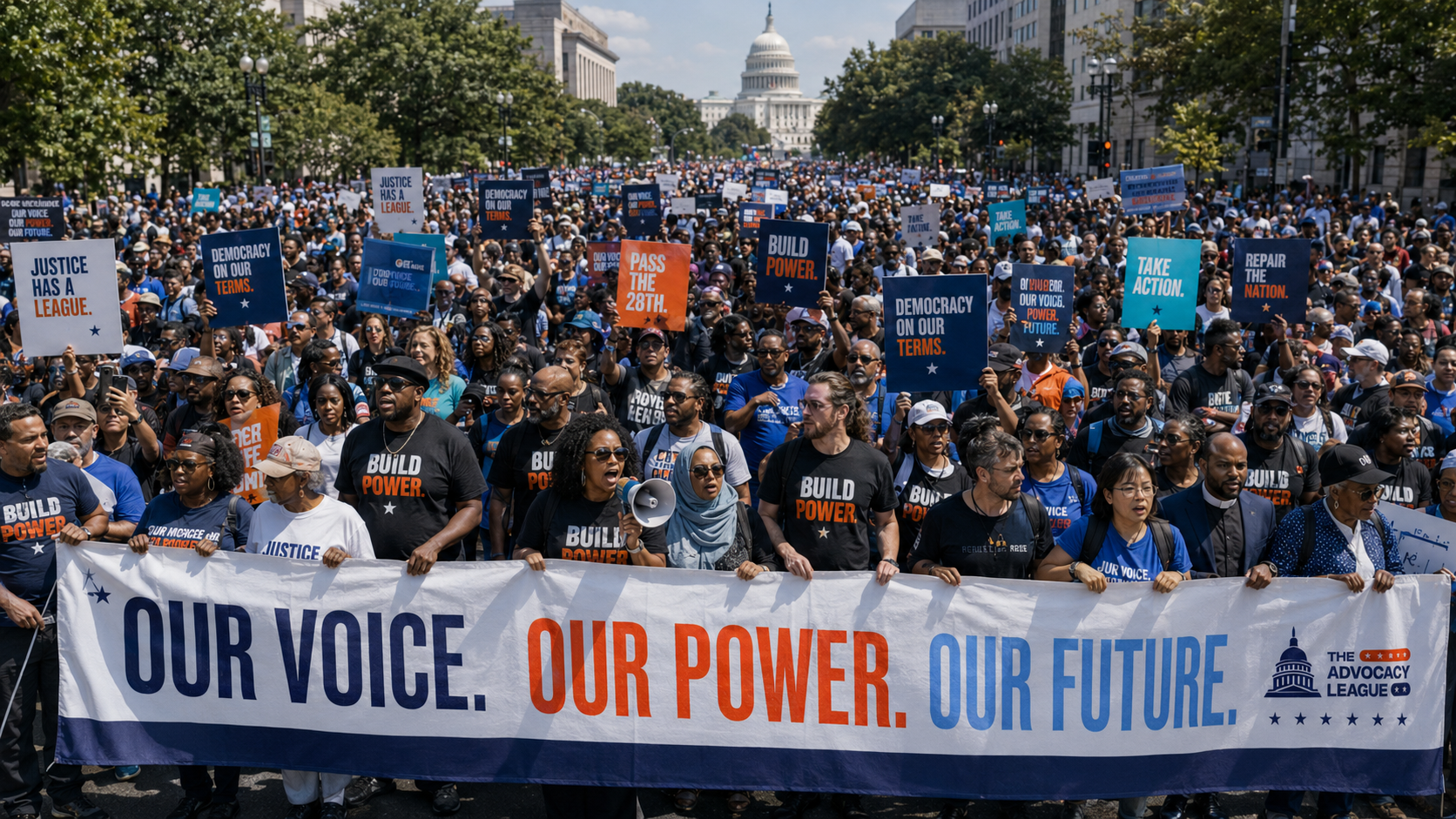
That is the work of the 28th Amendment. Every protection we have won lives in statute, and statute can be repealed by a simple majority or erased by a single ruling. We have watched it happen. The 28th Amendment finishes what Reconstruction started. It writes repair back into the Constitution itself, beyond the reach of any one administration, anchored in the five principles the world already recognizes for repair, restitution, compensation, rehabilitation, satisfaction, and guarantees of non repetition. Reparations are not only a check. They are the full architecture of making a nation whole.
And the harm is measurable. By one analysis, the cumulative cost of the racial wealth gap reaches into the trillions, as much as 21.3 trillion dollars this century alone. That gap was engineered, through slavery, through the broken promise of Reconstruction, through redlining, through exclusion from the programs that built the American middle class, and through mass incarceration. Harm that was built on purpose can be repaired on purpose. That is not charity. That is accounting.
Juneteenth Is a Celebration. Repair Is a Responsibility.
We hold both truths at once. The future is ours to build. We honor the people who were freed, and the people who fought to make that freedom real, and we pick up the work they were not allowed to finish. Not to tear down the founders, but to complete what the refounders began.
Freedom was always late. Repair cannot be. We have the history. We have the framework. We have one another. Together, we have everything we need.
About the author
Hannah Naomi Jones is the Founder of The Advocacy League, a national advocacy and mobilization hub building people power for democracy, justice, and repair.
★ Sources & further reading